
The mares who carry the breed
In breeding, stallions are often the ones we talk about. They are named, approved, compared, and remembered. Their influence is easy to see, and it spreads quickly.
But the long story of a breed is not carried forward by stallions alone.
It is carried by the mares.
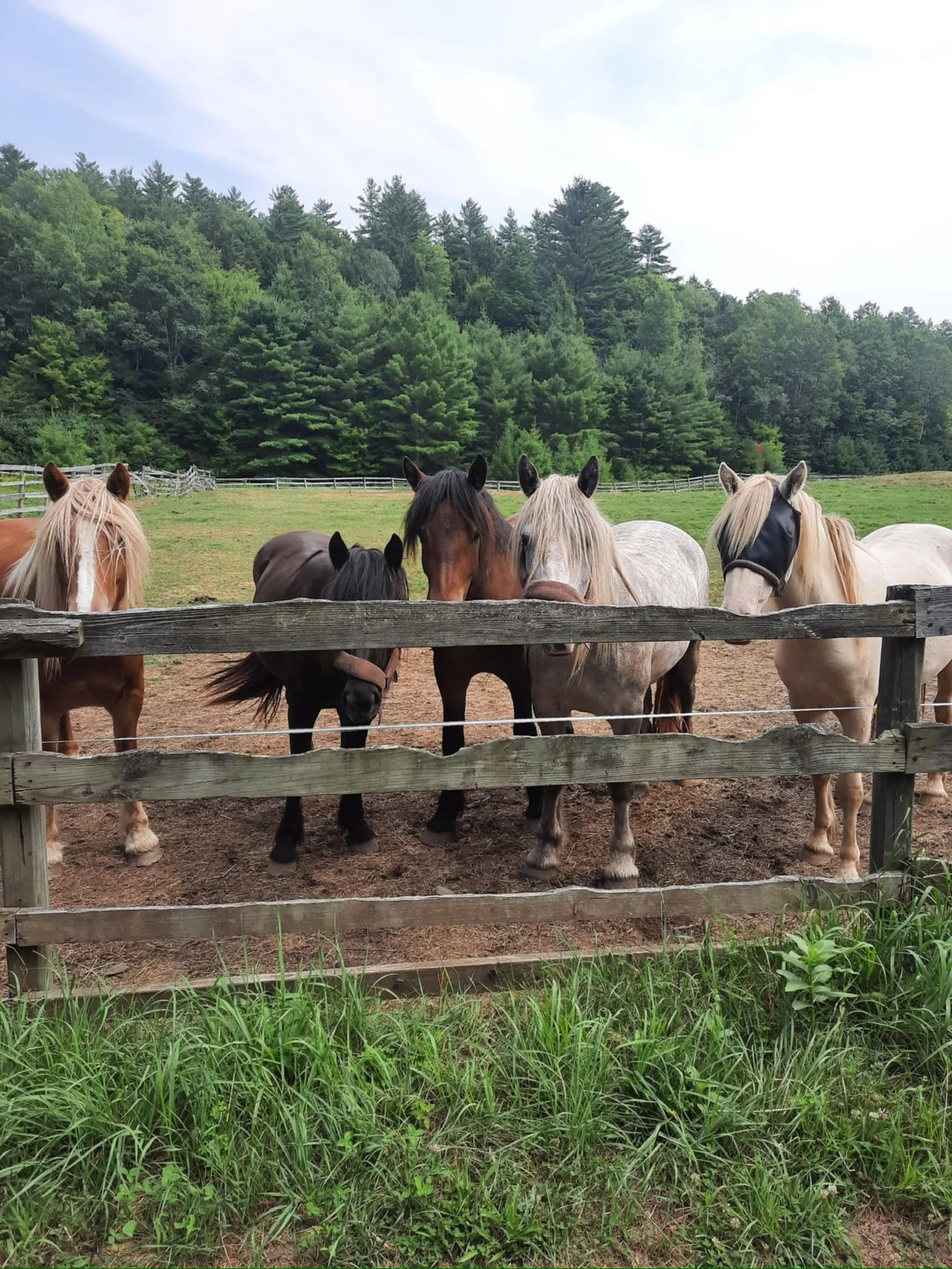
Our herd of mares in the U.S.
A mare works quietly. She carries one foal at a time. Long before that foal ever stands on its legs, she shapes how it develops. She determines the environment in which bones grow, muscles form, and balance takes shape. After birth, she continues that work through care, milk, and early guidance. Her influence begins before the foal exists as an individual, and it continues well beyond the first months of life.
Half of the foal’s genes come from her, just as from the sire. But she also passes on mitochondrial DNA, which is inherited only through the female line. This genetic material plays a role in how cells produce energy and how the body manages growth, repair, and daily strain. It does not decide the angles of joints or the length of bones, but it affects how well that structure is supported over time.
This is part of why some horses seem to hold together better than others. Not flashier. Not faster. Simply more even in their development. They maintain muscle more easily, recover better from work, and stay balanced as they mature. These qualities are subtle, and they often go unnoticed until years have passed. Yet they are central to producing horses that remain useful, healthy, and sound.
Each mare also carries something that cannot be measured by looking at her alone. She carries an unbroken maternal line. This line passes from mother to daughter, generation after generation. Sons do not carry it forward. If a mare has no breeding daughters, that line ends with her.
When a stallion line fades, much of that stallion’s influence usually remains in the population through daughters and later descendants. His genetics can resurface indirectly. A mare line does not return once it is gone. What she carries disappears completely when the line ends.
This is why mares matter so deeply in preservation breeding. Especially in small populations, where each remaining lineage represents a meaningful share of the breed’s genetic foundation. These lines carry genetic variation that the breed cannot afford to lose. They preserve options, resilience, and long-term health.
Mares are not dramatic heroes. They do not dominate pedigrees or headlines. Their contribution is slow and cumulative. Season after season, they quietly anchor the population, keeping it from narrowing too far or drifting too fast in one direction.
If stallions give a breed momentum, mares give it continuity.
They are the ones who remember what the breed has been, and make it possible for it to have a future.
Want to learn more? We host an event about Breed Preservation 101 this summer in the Bitterroot Valley, MT. You can sign up here.
