
History of the Norwegian Dole Horse
Long before there were studbooks, show rings, or borders between Norway and Sweden, there were simply northern workhorses — steady, sure-footed, and calm by nature. They pulled timber from steep valleys, carried farmers to church, and shared the quiet rhythm of life in the North. These were not just horses; they were survival partners — built by the land itself. From these mountain and forest horses, the Dølahest took shape in Gudbrandsdalen — powerful, kind, and made for hard work in the Norwegian terrain.
As time passed, breeders on both sides of the border began shaping their horses for slightly different needs. Norway bred for the steep ground and long winters, Sweden for the broad plains and heavy loads. That’s how the Dølahest, Nordsvensk, and later the Coldblooded Trotter each found their form — not through rivalry, but through adaptation.
When the Industrial Revolution reached Norway, the rhythm of rural life began to change. Machines replaced horses in the fields and forests, and the strong, steady Dølahest was suddenly without a clear role. To keep the breed relevant, some breeders began refining lighter Dølahest lines for harness racing, giving them a new purpose beyond the plow.One of the first to shape this evolution was Odin, a stallion imported from England in 1834.
Half Norfolk Trotter and half Thoroughbred, Odin brought speed, elasticity, and a touch of refinement to the sturdy Norwegian horse.
He didn’t erase the Dølahest’s strength — he polished it.
Through him, the Dølahest gained a more open trot and a proud, expressive carriage that still defines the breed today.

Veikle Balder, 1891, Vestre Gausdal
“He embodied everything the Dole horse stood for.”
A few generations later came Veikle Balder, born in 1891 in Vestre Gausdal. He embodied everything the Dølahest stood for — powerful yet gentle, elegant yet dependable. Balder carried both the old mountain strength and Odin’s refined movement, uniting the heavy and light lines into one balanced type. He became the most influential stallion in Dølahest history — and the link that binds the modern Dølahest and the Norwegian Coldblooded Trotter. When the trotting horses were formally separated into their own studbook in 1937, Balder’s blood was already deep in both.
To this day, every Norwegian Coldblooded Trotter traces back to him.
Across the border, the Nordsvensk Brukshäst evolved in parallel — a little heavier and broader in frame, but carrying the same quiet endurance and calm strength. The Nordsvensk and Dølahest have influenced one another over time, and under strict approval, Nordsvensk stallions can still be licensed for Dølahest breeding when their lineage fits the preservation goal.
Similarly, a Coldblooded Trotter mare may be approved to carry a Dølahest foal — not to blur the breeds, but to protect what still connects them.
Because this isn’t about saving the past, it’s about making sure it still has a future.
At The Norwegian Stables, that story comes full circle again. In 2026, three mares will make their breeding debut — each carrying a different strand of the Dølahest’s living heritage.
Their bloodlines tell their own stories.
One traces deep into Gudbrandsdalen, where the Dølahest first took its shape among mountains and meadows. Another carries Nordsvensk ancestry, showing a broader frame and the kind of steady strength that speaks of the northern working horse. And the third reflects the lighter Døle lines, shaped generations ago by Odin’s refinement and Balder’s balance — a touch more athletic, a little more expressive in motion.
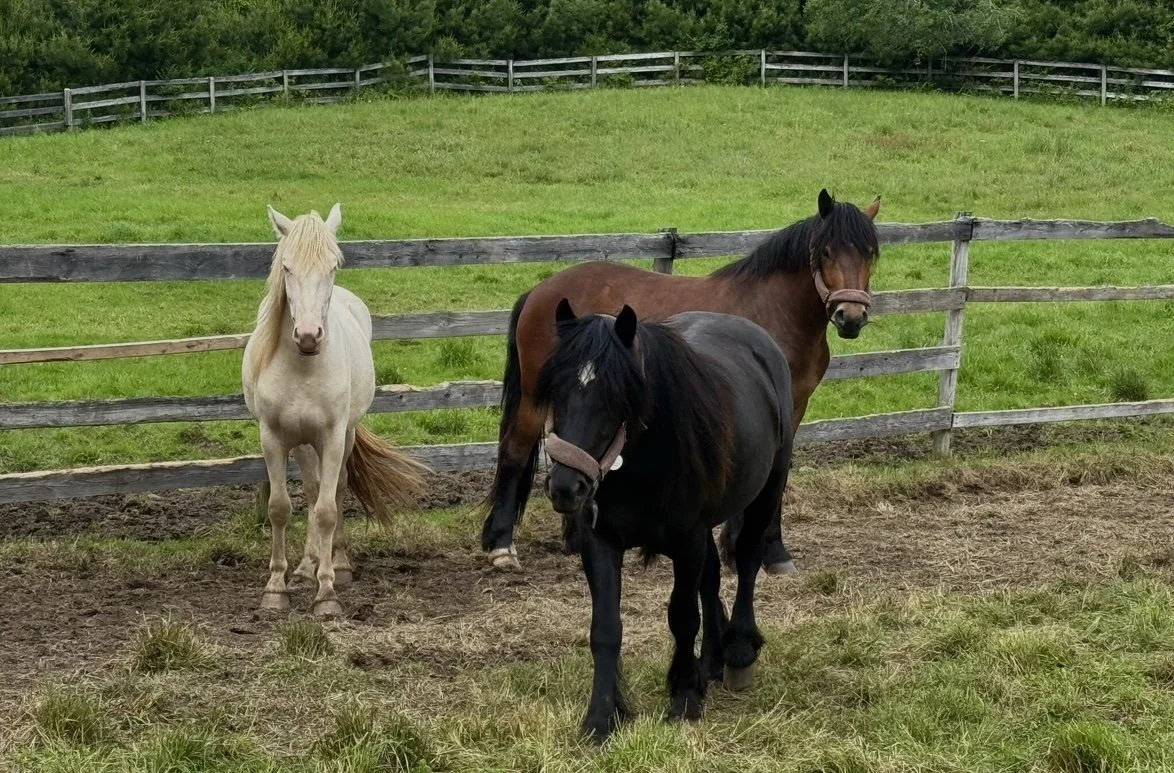
Idun Gjeldaker, Gullbruna & Elstad Vanja
Stand them side by side, and you can see the breed’s history written in muscle and bone. Three mares — three stories — yet one bloodline.
Because when it comes to the Norwegian Dole horse, we don’t just preserve the breed,
we preserve the whole story.
